Key takeaways
- LED walls are brightest and seamless, at a higher cost
- LCD video walls suit control rooms and dashboards
- Projectors give the biggest image for the lowest cost
- Ambient light and viewing distance drive the decision
Large-format displays make a strong impression in lobbies, boardrooms, auditoriums and control rooms. The three main options each have clear strengths.
LED walls
LED walls are built from modules with no visible seams. They're extremely bright, work in daylight, can be any size or shape and last up to 100,000 hours. They cost more upfront but suit prestige spaces.
LCD video walls
LCD video walls tile several thin-bezel displays together. They offer high resolution at a lower cost than LED, ideal for control rooms and dashboards, though thin seams remain visible.
Projectors
Projectors deliver very large images at the lowest cost and suit training rooms, classrooms and auditoriums. Laser projectors reduce maintenance and work better in lit rooms than older lamp models.
How to decide
Consider:
- Ambient light: bright spaces favour LED
- Viewing distance: sets the resolution you need
- Content: data dashboards suit LCD walls
- Budget: projectors are cheapest per inch
- Maintenance: LED and laser need the least
Understanding pixel pitch
For LED walls, pixel pitch is the distance between pixels. A smaller pitch gives a sharper image for close viewers but costs more. As a guide, the ideal minimum viewing distance in metres is roughly equal to the pixel pitch in millimetres. A lobby viewed from several metres can use a larger pitch than a boardroom wall viewed up close.
Total cost of ownership
Compare more than the purchase price:
- Installation, mounting and structural work
- Video processors and control systems
- Power consumption and heat
- Lamp or module replacement over time
- Expected lifespan
- Maintenance and support contracts
Where each option works best
LED walls are ideal for building lobbies, experience centres, retail flagships, auditoriums and outdoor signage, anywhere brightness, impact and seamless images matter. LCD video walls suit control rooms, operations centres and corporate dashboards where many sources are displayed at high resolution. Projectors remain the most practical choice for classrooms, training rooms, auditoriums on a budget and temporary event setups, where a very large image is needed at low cost. Many organisations use a combination, choosing the right technology for each space.
Planning the installation
Large-format displays need careful planning. LED walls and video walls are heavy and need structural assessment, strong mounting frames and good ventilation. Power and data cabling must be planned into the wall. Projectors need the right throw distance, a suitable screen and control over ambient light. For all three, consider how content will be delivered: a video processor or media player, control system, and connections for laptops, cameras or broadcast feeds. Involving an AV integrator early avoids costly changes during construction.
Content that looks good at scale
Large displays magnify everything, including poor content. Design content at the display's native resolution and aspect ratio, which for LED walls is often unusual, such as ultra-wide or tall formats. Use large, bold text that can be read from the back of the room, high-quality video and images, and strong contrast. Avoid dense slides designed for laptops. For lobbies and experience centres, motion graphics and brand videos create impact, while control rooms need clear, well-organised dashboards. Test content on the actual screen before an important event, because colours, brightness and text size look very different on a large wall than on a designer's monitor.
Control and content
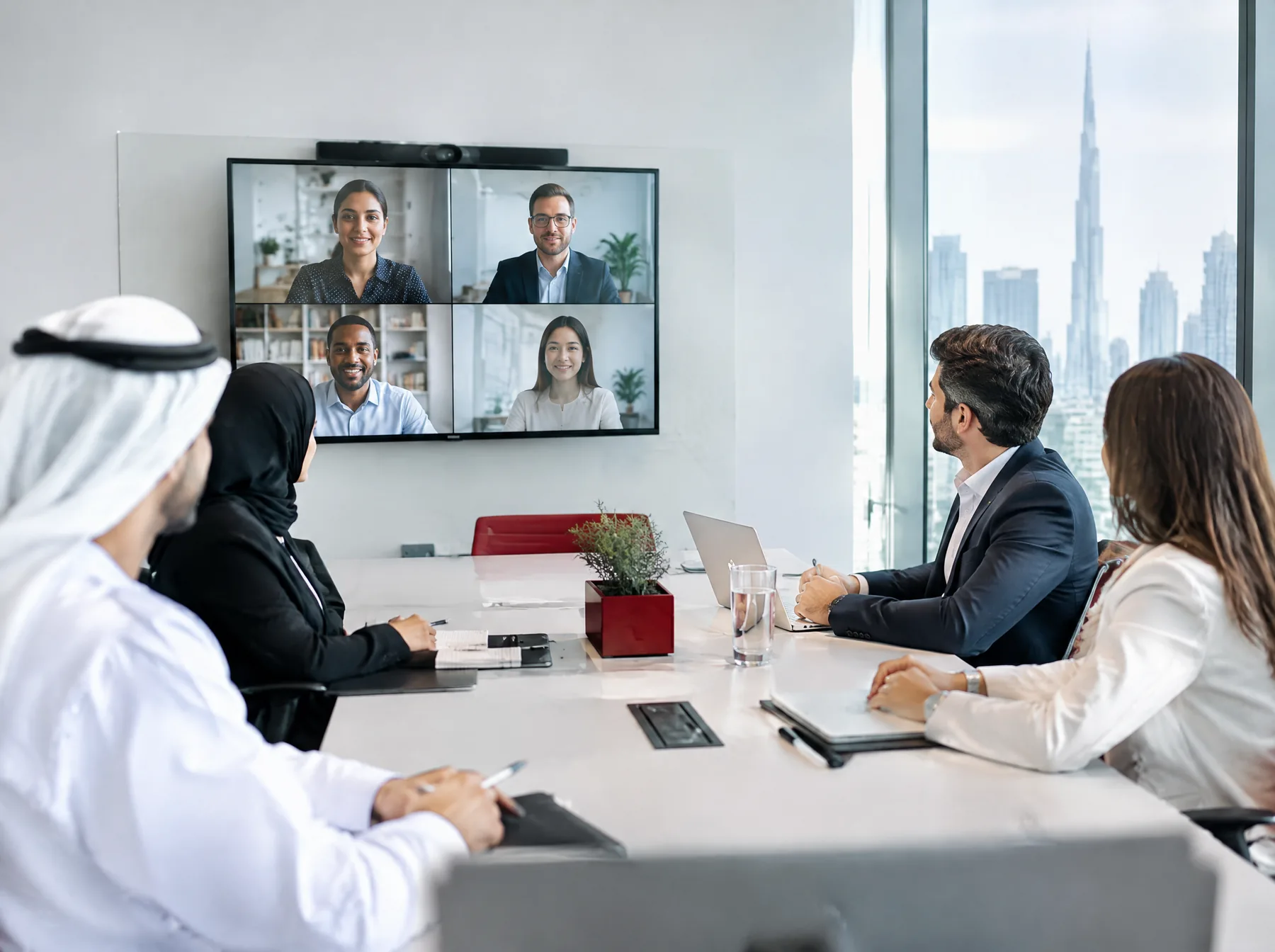
Whatever you choose, a video processor and control system let you switch sources, split screens and schedule content easily.
Frequently asked questions
Yes. Outdoor LED is designed for high brightness and weather resistance.
High-brightness laser projectors with suitable screens can work well in moderately lit rooms.
Quality LED panels are rated for up to 100,000 hours.
Yes. Video processors can split the display into several windows.