Key takeaways
- Wireless bridges link sites with clear line of sight
- Modern links reach gigabit speeds over several kilometres
- Installation takes days, not the weeks fibre can need
- Licensed or carefully planned frequencies avoid interference
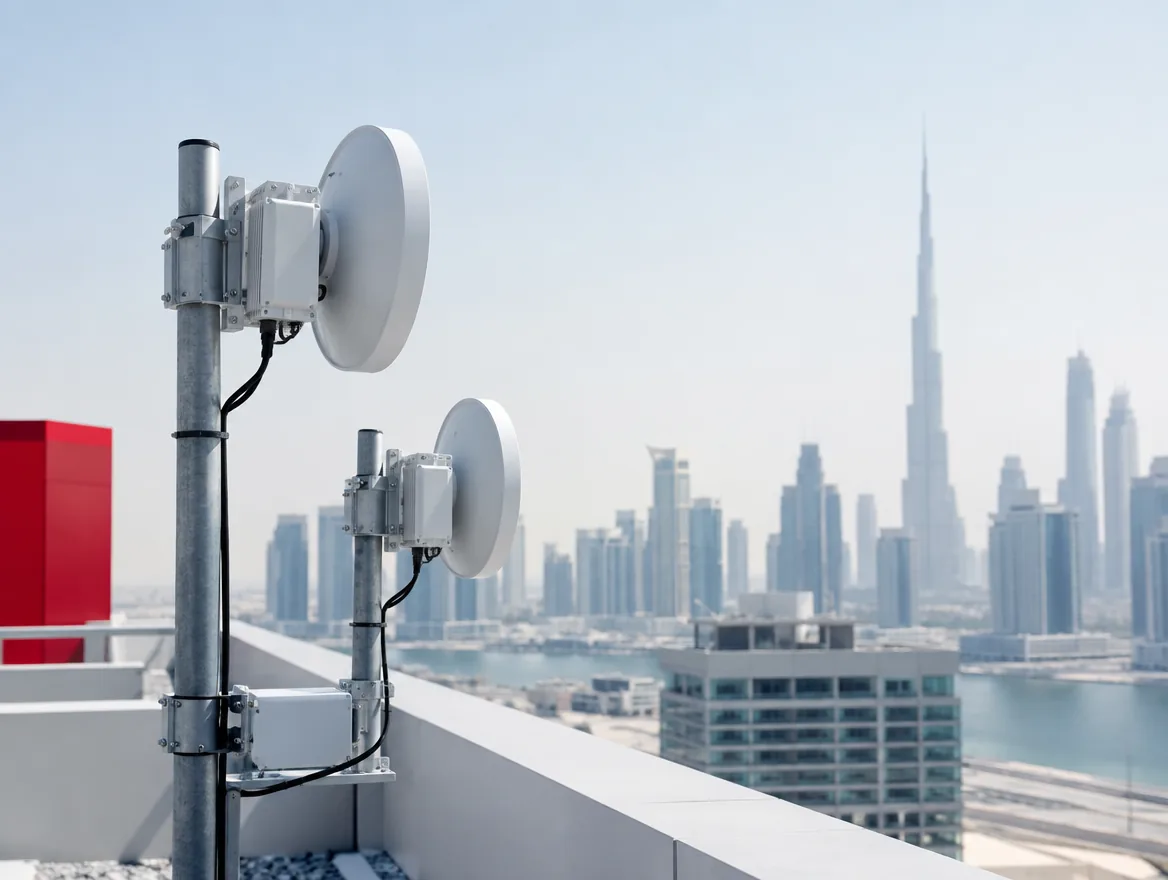
Warehouses, factories, labour camps, schools and villa compounds often have buildings that need to share one network. Running fibre between them means trenching, permits and cost. A point-to-point wireless link sends data through the air between two antennas instead.
How it works
Two directional radios are mounted on poles or roofs, pointed precisely at each other. They create a private, encrypted link that behaves like a cable between the two networks. Point-to-multipoint designs use one central radio to connect several remote buildings.
Line of sight is essential
The radios need a clear path between them. Buildings, trees and even cranes can block the signal, and the area around the direct line must also be reasonably clear. A site survey checks the path, distance and mounting positions before anything is ordered.
Typical uses
Point-to-point links are commonly used for:
- Connecting a warehouse to the main office
- Linking guard rooms and gates for CCTV and access control
- Sharing internet across villas or a compound
- Temporary sites and construction projects
- Backup links alongside fibre
- Remote cameras in car parks and perimeters
Speed and reliability
Modern equipment delivers hundreds of megabits to multiple gigabits, depending on distance and frequency. Heat, dust and strong winds are realities in the UAE, so use outdoor-rated equipment, solid mounts and surge protection. Monitoring alerts you if signal levels drop.
Our service
We survey the path, recommend the right radios, install and align them, and test throughput before handover. Most links are live within days.
Frequently asked questions
From a few hundred metres to well over ten kilometres, depending on equipment and line of sight.
Yes. Links are encrypted and use narrow, directional beams that are difficult to intercept.
Heavy dust or rain can reduce performance at some frequencies. Correct design allows for this.
Some frequencies require licensing. We advise on the right option for your site.